


K-Academic Diffusion Activities
K-Academic Diffusion Activities
K-Connectors 3rd Cohort Team ‘Korus’ Produces Audiobooks and Metaverse Exhibition Outcomes for Creative Programs Targeting Children at the Nations Kids School
- Created 2025.12.31
- Author
- Views474
The team ‘Korus’ of the K-Connectors 3rd cohort collaborated with the Nations Kids School to conduct the ‘Double Voice’ program for refugee children, disseminating the outcomes both online and offline. This activity aimed to create new words by combining Korean terms with the children’s native languages, based on prior research into their mother tongues, and to encourage creative expression using these words. The program was structured in three progressive stages, focusing on restoring the children’s language, identity, and agency in expression.
The program consisted of three activities: ▲ Creating new words by combining Korean words with words from the children’s native languages ▲ Designing characters based on those words ▲ Producing an audiobook scenario using the completed words and characters. After creating the scenario, the children recorded their own stories. The ‘Korus’ team then combined the recorded voices with the children’s characters to produce the final audiobook content.
The completed audiobook was delivered to the Nations Kids School. By transforming the children’s own drawings into characters and producing and distributing them as merchandise, the project provided an experience where creative output led to tangible results.
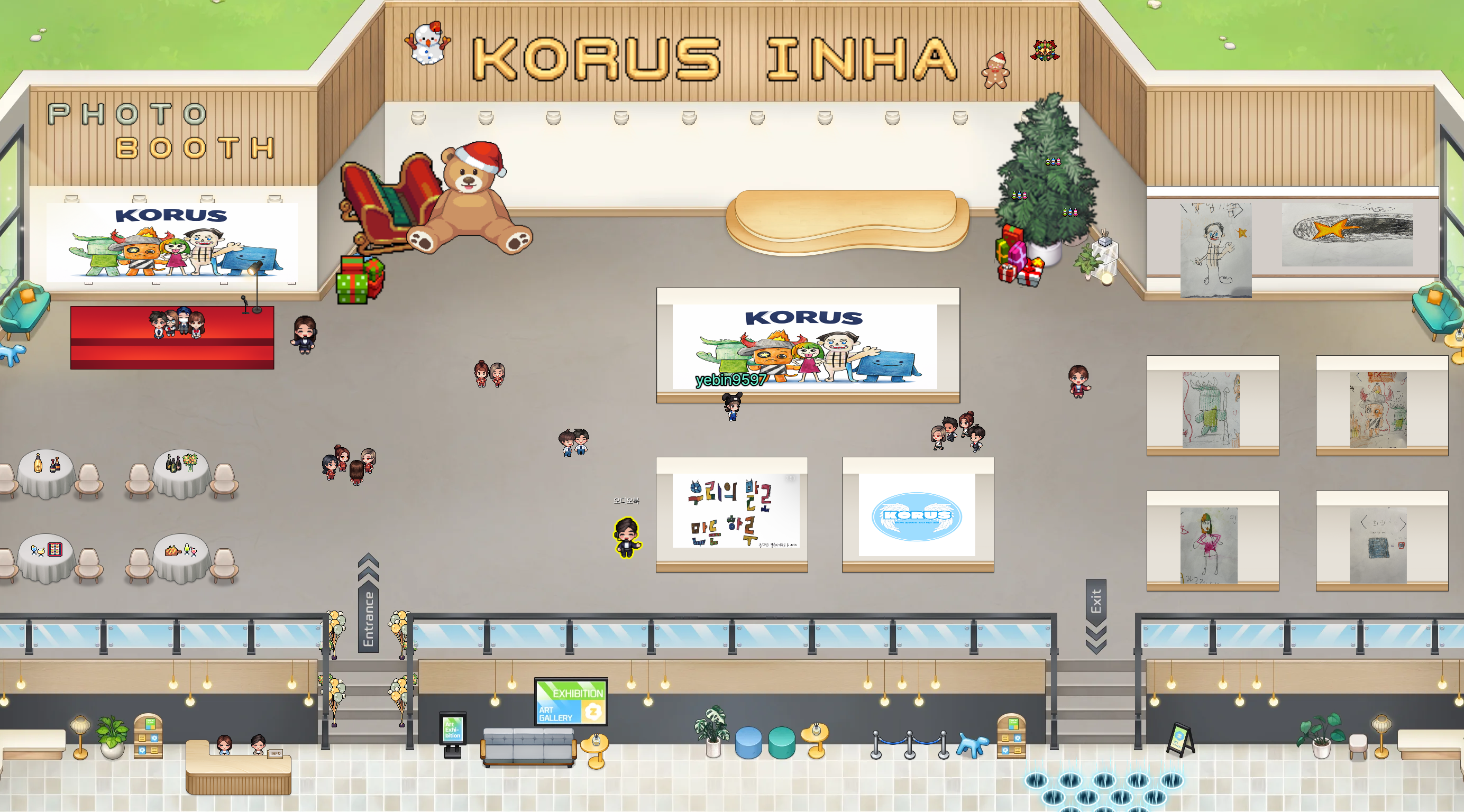
Alongside these efforts, the ‘Korus’ team has developed a metaverse exhibition space to showcase the full scope of their activities to date. This space comprises five distinct exhibition halls: ▲ The Nations Kids School Collaborative Exhibition Hall ▲ Refugee Children Awareness Improvement Open Booth Exhibition Hall ▲ Refugee Children Support Strategy Workshop Exhibition Hall ▲ Photo Zone and Interactive Feedback Zone ▲ Timeline Exhibition Hall. These were all designed to allow visitors to review the projects’ progression and achievements step by step.
Within the exhibition space, it implemented features where images enlarge when visitors approach to them, and newsletter, bulletin board, and audiobook content links to the ‘Korus’ team’s instagram account. Additionally, participant testimonials were structured by utilizing NPCs to mimic ‘human speech patterns’, ensuring the context and meaning of the activities are conveyed more vividly.
The ‘Korus’ team aimed to highlight refugee children not as recipients of aid, but as creative agents with their own languages and stories through this project. They also plan to continue expanding the social impact of their Korean studies initiatives.